Tag: Saints of Galway

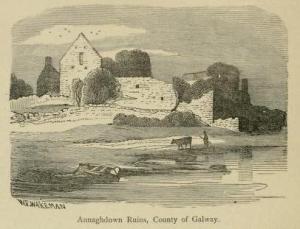
  • Saint Bríg of Annaghdown: Ireland’s Saint Scholastica


    February 10 is the feast of Saint Scholastica, twin sister of Saint Benedict, the father of western monasticism.  The pair enjoyed what modern scholar Jane Tibbetts Schulenburg has described as ‘perhaps one of the most famous examples of affection and love within the saintly sibling relationship’. I have always enjoyed how the Irish priest, Father Jerome Fahy, in an article on the Diocese of Annaghdown which you can read at the blog here, likened their relationship to that of the Irish saints Brendan and Bríg, describing them as ‘the Benedict and Scholastica of Ireland’. Unfortunately, whilst Saint Scholastica has her own day defined on the calendars of the saints, her Irish counterpart does not. There are over a dozen Irish female saints who share the name Bríg (Briga, Brígh), most of whom are untraceable. Canon O’Hanlon suggested in his entry for Saint Bríg of Coirpre on January 7 that she may be Brendan’s sister, but provided no supporting evidence. The place name Coirpre (Cairbre, modern Carbury) occurs in a number of different localities in Ireland. However, the Life of Saint Brendan clearly associates his sister with the County Galway monastery of Annaghdown, yet no feast for Bríg of Annaghdown is to be found on the calendars. Like other Irish female saints who have no written Life of their own, what we know of Bríg is drawn from the Life of her famous brother, just as our knowledge of Scholastica is founded on the Dialogues of Pope Saint Gregory the Great, who dedicated Book II of his four-volume collection on the lives and miracles of Italian saints to Saint Benedict. The Lives tell us that Saint Scholastica was the abbess of Plumbariola, just a few miles away from her brother’s foundation at Monte Cassino, whilst Bríga was at the convent of Annaghdown, County Galway, where the local church to this day remains dedicated to Saint Brendan. Scholastica seems to have visited her saintly sibling on an annual basis, the leadership of a monastic familia taking precedence over biological family ties for those dedicated to the religious life. As Jane Tibbetts Schulenburg points out:

    It was only with the realization of impending death that some of these male siblings finally felt free to see their sisters and express the affection which they had withheld for ascetic purposes during their lifetime. A primary focus of many of the vitae is on the saint’s final hours and deathbed scene: this was an especially important moment to be shared with one’s closest relatives and friends. Therefore, sisters and brothers often assumed a crucial role in the events surrounding the death of their saintly siblings: they were designated to carry out special instructions for burial; they remembered each other in prayers…; they frequently expressed a final wish that they be buried together, and promised each other that they would meet again in the celestial realm.

    Jane Tibbetts Schulenburg, Forgetful of Their Sex: Female Sanctity and Society, ca. 500–1100 (University of Chicago Press, 1998), 297.

    The author also points out a further trope found in a number of the vitae – the foreknowledge of a sibling’s death or a description of their arrival in heaven. This is the case with Saint Benedict and his sister, described below by Pope Saint Gregory the Great who first establishes the background to the death of Saint Scholastica. I noted here that it is the woman, Scholastica, who seems to meet with the writer’s approval rather than the  subject of the Life, Saint Benedict, much as another Irish woman saint, Cannera of Bantry, does in her encounter with Saint Senan of Scattery Island:

    CHAPTER THIRTY-THREE: Of a Miracle Wrought by his Sister, Scholastica.

    ….I must tell you how there was one thing which the venerable father Benedict would have liked to do, but he could not.

    His sister, named Scholastica, was dedicated from her infancy to our Lord. Once a year she came to visit her brother. The man of God went to her not far from the gate of his monastery, at a place that belonged to the Abbey. It was there he would entertain her. Once upon a time she came to visit according to her custom, and her venerable brother with his monks went there to meet her.

    They spent the whole day in the praises of God and spiritual talk, and when it was almost night, they dined together. As they were yet sitting at the table, talking of devout matters, it began to get dark. The holy Nun, his sister, entreated him to stay there all night that they might spend it in discoursing of the joys of heaven. By no persuasion, however, would he agree to that, saying that he might not by any means stay all night outside of his Abbey.

    At that time, the sky was so clear that no cloud was to be seen. The Nun, hearing this denial of her brother, joined her hands together, laid them on the table, bowed her head on her hands, and prayed to almighty God.

    Lifting her head from the table, there fell suddenly such a tempest of lightning and thundering, and such abundance of rain, that neither venerable Benedict, nor his monks that were with him, could put their heads out of doors. The holy Nun, having rested her head on her hands, poured forth such a flood of tears on the table, that she transformed the clear air to a watery sky.

    After the end of her devotions, that storm of rain followed; her prayer and the rain so met together, that as she lifted up her head from the table, the thunder began.  So it was that in one and the very same instant that she lifted up her head, she brought down the rain.

    The man of God, seeing that he could not, in the midst of such thunder and lightning and great abundance of rain return to his Abbey, began to be heavy and to complain to his sister, saying: “God forgive you, what have you done?” She answered him, “I desired you to stay, and you would not hear me; I have desired it of our good Lord, and he has granted my petition. Therefore if you can now depart, in God’s name return to your monastery, and leave me here alone.”

    But the good father, not being able to leave, tarried there against his will where before he would not have stayed willingly. By that means, they watched all night and with spiritual and heavenly talk mutually comforted one another.

    Therefore, by this we see, as I said before, that he would have had one thing, but he could not effect it.  For if we know the venerable man’s mind, there is no question but that he would have had the same fair weather to have continued as it was when he left his monastery.  He found, however, that a miracle prevented his desire. A miracle that, by the power of almighty God, a woman’s prayers had wrought.

    Is it not a thing to be marveled at, that a woman, who for a long time had not seen her brother, might do more in that instance than he could? She realized, according to the saying of St. John, “God is charity” [1 John 4:8]. Therefore, as is right, she who loved more, did more.

    This proves to be the last encounter between the siblings as the next chapter describes Saint Benedict’s vision of his sister’s death and his determination that they would remain united:

    CHAPTER THIRTY-FOUR: How Benedict Saw the Soul of his Sister Ascend into Heavenly Glory.

    GREGORY: The next day the venerable woman returned to her nunnery, and the man of God to his abbey. Three days later, standing in his cell, and lifting up his eyes to heaven, he beheld the soul of his sister (which was departed from her body) ascend into heaven in the likeness of a dove.

    Rejoicing much to see her great glory, with hymns and praise he gave thanks to almighty God, and imparted the news of her death to his monks.  He sent them presently to bring her corpse to his Abbey, to have it buried in that grave which he had provided for himself. By this means it fell out that, as their souls were always one in God while they lived, so their bodies continued together after their death.

    Gregory the Great (c. 540-604), Dialogues, Book II (Life and Miracles of St. Benedict).

    Sadly, the accounts of the Irish Benedict and Scholastica are not quite so detailed. In the Betha Brendain, the Irish Life of Saint Brendan, we first meet Saint Bríg when the young Brendan is studying with his foster father Bishop Erc and the hagiographer leaves us in no doubt about the strong bond of love between the siblings:

    (12) Brig, daughter of Findlug, his sister, was with him there, and great was his love for her, for he saw the attendance of angels above her.

    Having established this affectionate relationship between the siblings in childhood, it is at the end of his life that we encounter Saint Bríg once again:

    (206) Brendan after this went to visit his sister Brig at the fort of Aed son of Eochaid, which is now called Enach Duin. So then, after traversing sea and land, after raising dead men, healing lepers, blind, deaf, lame, and all kinds of sick folk, after founding many cells, and monasteries, and holy churches, after appointing abbots and masters, after blessing cataracts and estuaries, after consecrating districts and tribes, after putting down crimes and sins, after great perils by sea and land, after expelling demons and vices, after pre-eminence in pilgrimage and (ascetic) devotion, after performance of mighty works and miracles too numerous to mention, St. Brendan drew near to the day of his death.

    (207) Then said Brendan to the brethren after Mass on the Sunday, and after receiving the body of Christ and His blood: ‘God,’ said he, is calling me to the eternal kingdom; and my body must be taken to Clonfert, for there will be attendance of angels there, and there will be my resurrection…..

    (208) When he had finished saying all this, he blessed the brethren and his sister Brig, and when he reached the threshold of the church, he said: ‘In manus tuas, Domine,’ etc, Then he sent forth his spirit….

    C. Plummer, ed. and trans., Bethada Náem nÉrenn – Lives of Irish Saints, Vol. II (Oxford, 1922), 46; 91.

    It is at Annaghdown then, his beloved sister present among the monastic brethren, that Saint Brendan’s earthly life ends. I noted too how the hagiographer specifically named Saint Bríg as a recipient of her brother’s final blessing, thus putting her, along with Saint Scholastica, into the category of Sorores Sanctae identified by Tibbetts Schulenburg.

    Deus, qui beátae Vírginis tuæ Scholásticæ ánimam ad ostendéndam [innocéntiæ viam in colúmbæ spécie cælum penetráre fecísti: da nobis eius méritis et précibus ita innocénter vivere; ut ad ætérna mereámur gáudia perveníre. Per Dóminum.]

    Let us pray: O God, Who, to show the innocence of her life, didst cause the soul of Thy blessed Virgin Scholastica to ascend to Heaven in the form of a dove: grant, we beseech Thee, by her merits and prayers, that we may live so innocently, as to deserve to arrive at eternal joys. Through Jesus Christ, Thine only-begotten Son, Our Lord, Who with Thee and the Holy Ghost liveth and reigneth, God, for ever and ever.

    R. Amen.

    Collect for the Feast of Saint Scholastica, February 10.

    Content Copyright © Omnium Sanctorum Hiberniae 2012-2024. All rights reserved.


  • A Week on the Isles of Arran


    March  21 is the feast  of Saint Enda of Aran, one of the founding fathers of Irish monasticism.  His island home became more accessible during the Victorian era with the provision of a bi-weekly steamer service from Galway.  Last year I posted the moving account of episcopal visitor Bishop George Conroy of Ardagh, published after his sudden death in 1877. It is available on the blog here. Twenty years later a female traveller, Laura Grey, boarded the ‘well-appointed steamer’ at Galway and arrived three hours later on Aran of the Saints. I first encountered Laura Grey in connection with my blog on the Irish martyrs, as The Irish Rosary periodical had published one of her papers on Dominican martyr of Cashel, Father Richard Barry. That paper can be read here. I am very keen to find out more about this lady, she clearly had a link to the Dominican order (was she perhaps a tertiary?) and I wondered if ‘Laura Grey’ was a pseudonym. She would seem to have been a lady of some means too as four years before her excursion to Aran she had published an account of her visit to the Dominican Abbey of Our Lady of Thanks at Youghal, which is available to read at my other site here. She begins her article on Aran with a description of the island and its inhabitants. It’s interesting from a social history point of view in that first she describes how the modern world is encroaching on Aran and secondly she testifies to the developing tourist industry, describing how ‘the visitor can engage neat apartments in one or two cottages on the large island. The tariff is most moderate and the food excellent’. Fascinating though this is, I have chosen to omit the first part of the paper in order to concentrate on what Laura Grey has to tell us about Saint Enda and  his saintly students. The volume is available, however,  from the Internet Archive where the paper may be read in full:

    A WEEK ON THE ISLES OF ARRAN, COUNTY GALWAY, IRELAND. 

    Laura Grey.


    Midway, where the Atlantic Ocean lashes on one side the coast of Clare, and on the other the rocky headlands of Connemara, the Isles of Arran lie. Arranmore, or the great island; Innismaan, or the middle island, and Innishere, or the eastern or southern island. Although all three islands bristle with Christian and pagan antiquities, the tourist will naturally turn towards Arranmore, the largest of the group, and ask its past history…

    But the writer must hasten on to contemplate these islands in the fifth century, when St. Enda first landed and steered his currach into Killeaney Bay, where he lived, labored, and died, leaving behind him a school of anchorites that earned for Arran the Celtic epithet, “Arran-na-Naomh,” Arran of the Saints.

    ISLES OF ARRAN.

    St. Enda (pronounced Enna), the patron of Arran, came of royal Irish blood, being the son of Conall Derg, king of Oriel. His father’s territory extended from Lough Erne in Fermanagh, to the sea at Dundalk. Conall Derg beame a convert to the Christian faith preached by St. Patrick, and during the saint’s lifetime renounced his kingdom and became a recluse.

    His son, Enda, succeeded to the crown, and like most youths of the time, indulged in the rough pastimes of his father’s court. He went hawking and hunting, and making warlike raids on the neighboring chieftains who invaded his domains.

    He had two sisters, one named Darenia, married to AEngus, king of Munster, whom St. Patrick baptized, and another named Fanchea, who at an early age left her home to join a religious Community near the present town of Enniskillen, in the County Fermanagh.

    On one occasion, Enda set forth with his clansmen to chastise a refractory chief, and passed by his sister’s oratory en route. Looking over the low stone wall which bordered the enclosure, he beheld Fanchea and her novices at prayer. One of them was a most beautiful maiden, and Enda secretly longed to carry her off to be his wife. He bided his opportunity, and when the heat of the battle was over, he retraced his steps towards his sister’s retreat, and demanded the maiden in marriage.

    Fanchea forbade him to approach near her, saying his hands were stained with human blood, and he was unworthy to enter the sacred enclosure. Enda in defence, urged that it was his duty to defend himself against the inroads of his enemies, and concluded in these words:

    “I have not killed any man with my own hands, nor yet have
    I sinned with women.”

    Fanchea, perceiving it became useless to bandy words with her
    warrior-brother, called the maiden aside, and addressed her
    thus:

    “My sister, a choice is given you to-day. Wilt thou love the Spouse whom I love, or rather a carnal spouse?”

    “ I will always love thy Spouse,” replied the maiden.

    Fanchea told her to lie down on her couch, and cast a veil over her face. Then calling Enda into the cell, she removed the veil, and brother and sister saw the girl was dead.

    Enda burst into lamentations, whilst Fanchea stood by and spoke to him of the shortness of life and the certainty of death. Her words bore fruit. The prince rose from his knees, swept aside his tears, and vowed he would renounce his kingdom, and become a recluse.

    Before embracing his new vocation he built a high rampart of earth round his sister’s cloister, to prevent outsiders from invading her privacy, and then he set forth to save his own soul, and those of others. The remains of this rampart may still be traced.

    After divers rambles through his native land, Britain, and even Rome, Enda returned to Ireland, and sought for some remote spot where he might live and die.

    His brother-in-law, Aengus, hearing of his desire, offered him the Isles of Arran, over which he ruled as king. Enda gladly accepted, and in the year 484 crossed over from Garomna island on the Galway coast, and cast his lot on the rugged shores which were to be the scene of his many triumphs and labors. Into Killeaney Bay, since called after him ( Kill, a church, Enny of Enda), he steered his currach.

    By the wild waves he takes his last rest under a leac, or flag, which is usually covered by the shifting sand. One hundred and twenty-seven saints sleep around him in the same churchyard, guarding the oratory of their spiritual father, who dwelt “in his prison of hard, narrow stone ” for more than sixty years. Tradition points to a curious rock on the sea-shore, and tells us that St. Enda’s currach was turned into stone on his landing. The miracle foreshadowed to the saint that his boat had taken her last voyage, and that he was destined never to quit the isles of Arran.

    And so it came to pass, for although the islands were frequently visited by Irish saints, the founder of Arran remained true to his home in the ocean. Early in St. Enda’s history, we find St. Brendan, the navigator, visiting Arran previous to his departure on the Western Main to discover America.

    St. Finian of Clonard, next passed the way, and paused to take counsel from the saintly hermit whose fame for sanctity was rapidly lighting up the West.

    Even the great Columbcill “ of the fiery soul,” heard of Enda, and hastened to join the ranks of his disciples.

    He ground the corn and herded the sheep, unconscious of the bloody field of Cuil-Dreimhe which was to be expiated by him in after years by a lifetime of penance on Iona.

    At St. Enda’s command he left Arran, lamenting over his departure in the words which Aubrey de Vere has translated from Irish Odes

    “Farewell to Arran Isle;
    farewell  I steer for Hy— my heart is sore;
    The breakers burst, the billows swell,
    Twixt Arran Isle and Alba’s shore.”

    During St. Columbcille’s sojourn in Arran, St. Ciaran, “ the carpenter’s son,” visited the islands. For three years he lived amongst the anchorites, built his church, blessed the sparkling well which bears his name, and finally set sail for Clonmacnoise on the banks of the Shannon, where he was to found his monastery. Amongst its many ancient churches, Arran holds none quainter or more devotional than St. Ciaran’s.

    Overhanging the bay, which still retains the saint’s name, the four roofless walls stand. The altar is there at which he celebrated Mass, and his narrow cell, which communicated with the church through a window overlooking the altar. Window, church, and cell are intact, and attract the devotion of the Catholic, and the curiosity of the tourist.

    One morning our saint came to St. Enda, and related to him a dream which he had dreamt the night before. He beheld a gigantic oak tree which overshadowed a broad plain, and touched the ground with its numerous branches. Panting for a reply, the youthful Ciaran watched the tears gather in the eyes of the aged Enda, and a gloomy foreboding seized him that his hour of departure from Arran was nigh. After a moment of silent prayer, St. Enda read the dream. He told his companion that the oak symbolized himself (St. Ciaran), whose name would cover the plains by the Shannon with glory, like the overweighted oak-tree which was bowed to the ground with its load of foliage. “ Thou must leave Arran, my son,” pursued the patriarch.  Into yonder creek thou shalt steer thy currach, and God will direct thy footsteps into the interior of the country, where a winding river flows. There shalt thy name draw many souls into God’s vineyard, and the shadow of thy virtues will overcast the plains, like the oak thou hast seen in thy dream.”

    Waving his hand towards the Connemara coast opposite Arran, St. Enda pointed out the bay now called Kilkerran, and Ciaran knew he should make ready to cross the strait which separated him from the mainland. St. Enda and his anchorites congregated on the shore to bid him farewell, and we are told that the Founder of Arran laid his hand on the bowed head of Ciaran, and blessed him and the monasteries he should build. It was to be the last meeting on earth of the two saints — the aged and the young.

    St. Ciaran’s career was destined to be brief and glorious, and he was to precede St. Enda to the tomb by many years. He was aged twenty-seven at the time he left Arran, and six years ahead would find him dying of the pestilence at Clonmacnoise, with St. Kevin of Glendalough holding before his fading sight the Holy Viaticum.

    St. Kevin and St. Ciaran had met at Arran, and cemented a friendship which never died out. A brother of the first-named saint, also named Keevin , is buried on the middle island of Arran.

    Most of the Irish saints visited the islands at some period of their lives. St. Carthagh of Lismore, St. Yarlath of Tuam, and a host of others could be named had we space to prolong our researches into the Christian past of Arran. The three islands bristle with remains of their saintly footsteps.

    The church of the “four beautiful saints’ may be quoted, where four flat slabs marked the graves of four hermits, who lived a life of common prayer, officiated at the same adjacent little church, and were laid side by side when they died.

    Kilronan, the chief village on Arran Mor, derives its name from St. Ronan, whose grave is still shown. He was a disciple of St. Enda’s, but nothing more is known of him.

    About forty years ago the tomb of another saint was discovered, named Brecan. His little church formerly stood surrounded by six other churches, which earned for the group the title of the “ Seven Churches.” Only one of the seven remains, Tempull a Phuill, to tell where the others flourished.

    We find another disciple of St. Enda’s, St. Colman McDuagh, utilizing an old fort of the Firbolgs, and converting the deserted stronghold into cells for his Community. Round about the pagan fort a cluster of other churches grew up, and the place is known under the name of Kilmurvey.

    Close to the seashore, between the village of Kilronan and the church of the four beauties, tradition points to a cluster of ruins said to have been once the abode of religious women who lived under St. Enda’s direction. A female saint, whose name the writer forgets, is buried on the middle island.

    St. Enda’s days, and those of his followers, were filled with prayer and manual labor. The hours fled by, diversified by prayer, tilling the ground, and the study of the Scriptures.

    Each Community had its own church, where the brethren assembled for public devotions, and each Brother took his meals in the common refectory, and cooked them in the common kitchen. They lived like the first Christians, having all things equally divided. Thus their peaceful lives sped on, undisturbed by any noise from without, except the wild roar of the Atlantic Ocean.

    St. Enda himself never tasted meat, though he allowed his disciples to kill a sheep on great festival days for themselves and their visitors. Each monk slept in bee-hive cell, or cloghaun, and wore the same garments during the hours of repose, as he had done in the daytime. The pallet was of straw, or the bare ground, and a rug was the covering by night.

    The Community sowed the arid soil with wheat, rye, and oats, or fished round the coast to secure their frugal meals. In this manner they supported themselves by the sweat of their brows. When the crops had been gathered into the rude barns, they were ground by a quern, or kneaded into meal and baked for general consumption.

    St. Enda divided the islands into ten portions, and placed a superior over each Community, who was bound in his turn to acknowledge the Saint of Arran as superior.

    At stated times, St. Enda made a visitation of his insular territory, and saw that his rule of life was enforced in its primitive vigor.

    He died at the advanced age of one hundred years, in the year 540. He was buried in his oratory close to the sea, called after his grave, Teglach Enda, meaning tomb of Enda. From his last resting-place the present village of Killeaney takes its name, being derived from the Irish words Kill Enda, Church of Enda.

    Part II. of our sketch of the Arran isles has come to a close. Dr. Healy, the present Catholic Bishop of Clonfert, in his admirable work on “Ireland’s Ancient Schools and Scholars,’’ pays a well-earned tribute to Arran, and the saints who dwelt there.

    A perusal of his book induced the present writer to take ship from Galway in the August of 1896, and visit these far Western islands. She trusts others may follow her example, and if this sketch of Arran stimulates them to do so, she has had her reward.

    THE ROSARY MAGAZINE, Volume 11, August, 1897, 147-155.


    Content Copyright © Omnium Sanctorum Hiberniae 2012-2024. All rights reserved.

  • Saint Bríg of Annaghdown: Ireland's Saint Scholastica

    February 10 is the feast of Saint Scholastica, twin sister of Saint Benedict, the father of western monasticism.  The pair enjoyed what modern scholar Jane Tibbetts Schulenburg has described as ‘perhaps one of the most famous examples of affection and love within the saintly sibling relationship’. I have always enjoyed how the Irish priest, Father Jerome Fahy, in an article on the Diocese of Annaghdown which you can read at the blog here, likened their relationship to that of the Irish saints Brendan and Bríg, describing them as ‘the Benedict and Scholastica of Ireland’. Unfortunately, whilst Saint Scholastica has her own day defined on the calendars of the saints, her Irish counterpart does not. There are over a dozen Irish female saints who share the name Bríg (Briga, Brígh), most of whom are untraceable. Canon O’Hanlon suggested in his entry for Saint Bríg of Coirpre on January 7 that she may be Brendan’s sister, but provided no supporting evidence. The place name Coirpre (Cairbre, modern Carbury) occurs in a number of different localities in Ireland. However, the Life of Saint Brendan clearly associates his sister with the County Galway monastery of Annaghdown, yet no feast for Bríg of Annaghdown is to be found on the calendars. Like other Irish female saints who have no written Life of their own, what we know of Bríg is drawn from the Life of her famous brother, just as our knowledge of Scholastica is founded on the Dialogues of Pope Saint Gregory the Great, who dedicated Book II of his four-volume collection on the lives and miracles of Italian saints to Saint Benedict. The Lives tell us that Saint Scholastica was the abbess of Plumbariola, just a few miles away from her brother’s foundation at Monte Cassino, whilst Bríga was at the convent of Annaghdown, County Galway, where the local church to this day remains dedicated to Saint Brendan. Scholastica seems to have visited her saintly sibling on an annual basis, the leadership of a monastic familia taking precedence over biological family ties for those dedicated to the religious life. As Jane Tibbetts Schulenburg points out:

    It was only with the realization of impending death that some of these male siblings finally felt free to see their sisters and express the affection which they had withheld for ascetic purposes during their lifetime. A primary focus of many of the vitae is on the saint’s final hours and deathbed scene: this was an especially important moment to be shared with one’s closest relatives and friends. Therefore, sisters and brothers often assumed a crucial role in the events surrounding the death of their saintly siblings: they were designated to carry out special instructions for burial; they remembered each other in prayers…; they frequently expressed a final wish that they be buried together, and promised each other that they would meet again in the celestial realm.

    Jane Tibbetts Schulenburg, Forgetful of Their Sex: Female Sanctity and Society, ca. 500–1100 (University of Chicago Press, 1998), 297.

    The author also points out a further trope found in a number of the vitae – the foreknowledge of a sibling’s death or a description of their arrival in heaven. This is the case with Saint Benedict and his sister, described below by Pope Saint Gregory the Great who first establishes the background to the death of Saint Scholastica. I noted here that, unusually for hagiography, it is the woman, Scholastica, who seems to meet with the writer’s approval rather than the  subject of the Life, Saint Benedict:

    CHAPTER THIRTY-THREE: Of a Miracle Wrought by his Sister, Scholastica.

    ….I must tell you how there was one thing which the venerable father Benedict would have liked to do, but he could not.

    His sister, named Scholastica, was dedicated from her infancy to our Lord. Once a year she came to visit her brother. The man of God went to her not far from the gate of his monastery, at a place that belonged to the Abbey. It was there he would entertain her. Once upon a time she came to visit according to her custom, and her venerable brother with his monks went there to meet her.

    They spent the whole day in the praises of God and spiritual talk, and when it was almost night, they dined together. As they were yet sitting at the table, talking of devout matters, it began to get dark. The holy Nun, his sister, entreated him to stay there all night that they might spend it in discoursing of the joys of heaven. By no persuasion, however, would he agree to that, saying that he might not by any means stay all night outside of his Abbey.

    At that time, the sky was so clear that no cloud was to be seen. The Nun, hearing this denial of her brother, joined her hands together, laid them on the table, bowed her head on her hands, and prayed to almighty God.

    Lifting her head from the table, there fell suddenly such a tempest of
    lightning and thundering, and such abundance of rain, that neither venerable Benedict, nor his monks that were with him, could put their heads out of doors. The holy Nun, having rested her head on her hands, poured forth such a flood of tears on the table, that she transformed the clear air to a watery sky.

    After the end of her devotions, that storm of rain followed; her prayer and the rain so met together, that as she lifted up her head from the table, the thunder began.  So it was that in one and the very same instant that she lifted up her head, she brought down the rain.

    The man of God, seeing that he could not, in the midst of such thunder and lightning and great abundance of rain return to his Abbey, began to be heavy and to complain to his sister, saying: “God forgive you, what have you done?” She answered him, “I desired you to stay, and you would not hear me; I have desired it of our good Lord, and he has granted my petition. Therefore if you can now depart, in God’s name return to your monastery, and leave me here alone.”

    But the good father, not being able to leave, tarried there against his will where before he would not have stayed willingly. By that means, they watched all night and with spiritual and heavenly talk mutually comforted one another.

    Therefore, by this we see, as I said before, that he would have had one thing, but he could not effect it.  For if we know the venerable man’s mind, there is no question but that he would have had the same fair weather to have continued as it was when he left his monastery.  He found, however, that a miracle prevented his desire. A miracle that, by the power of almighty God, a woman’s prayers had wrought.

    Is it not a thing to be marveled at, that a woman, who for a long time had not seen her brother, might do more in that instance than he could? She realized, according to the saying of St. John, “God is charity” [1 John 4:8]. Therefore, as is right, she who loved more, did more.

    This proves to be the last encounter between the siblings as the next chapter describes Saint Benedict’s vision of his sister’s death and his determination that they would remain united:

    CHAPTER THIRTY-FOUR: How Benedict Saw the Soul of his Sister Ascend into Heavenly Glory.

    GREGORY: The next day the venerable woman returned to her nunnery, and the man of God to his abbey. Three days later, standing in his cell, and lifting up his eyes to heaven, he beheld the soul of his sister (which was departed from her body) ascend into heaven in the likeness of a dove.

    Rejoicing much to see her great glory, with hymns and praise he gave thanks to almighty God, and imparted the news of her death to his monks.  He sent them presently to bring her corpse to his Abbey, to have it buried in that grave which he had provided for himself. By this means it fell out that, as their souls were always one in God while they lived, so their bodies continued together after their death.

    Gregory the Great (c. 540-604), Dialogues, Book II (Life and Miracles of St. Benedict).

    Sadly, the accounts of the Irish Benedict and Scholastica are not quite so detailed. In the Betha Brendain, the Irish Life of Saint Brendan, we first meet Saint Bríg when the young Brendan is studying with his foster father Bishop Erc and the hagiographer leaves us in no doubt about the strong bond of love between the siblings:

    (12) Brig, daughter of Findlug, his sister, was with him there, and great was his love for her, for he saw the attendance of angels above her.

    Having established this affectionate relationship between the siblings in childhood, it is at the end of his life that we encounter Saint Bríg once again:

    (206) Brendan after this went to visit his sister Brig at the fort of Aed son of Eochaid, which is now called Enach Duin. So then, after traversing sea and land, after raising dead men, healing lepers, blind, deaf, lame, and all kinds of sick folk, after founding many cells, and monasteries, and holy churches, after appointing abbots and masters, after blessing cataracts and estuaries, after consecrating districts and tribes, after putting down crimes and sins, after great perils by sea and land, after expelling demons and vices, after pre-eminence in pilgrimage and (ascetic) devotion, after performance of mighty works and miracles too numerous to mention, St. Brendan drew near to the day of his death.

    (207) Then said Brendan to the brethren after Mass on the Sunday, and after receiving the body of Christ and His blood: ‘God,’ said he, is calling me to the eternal kingdom; and my body must be taken to Clonfert, for there will be attendance of angels there, and there will be my resurrection…..

    (208) When he had finished saying all this, he blessed the brethren and his sister Brig, and when he reached the threshold of the church, he said: ‘In manus tuas, Domine,’ etc, Then he sent forth his spirit….

    C. Plummer, ed. and trans., Bethada Náem nÉrenn – Lives of Irish Saints, Vol. II (Oxford, 1922), 46; 91.

    It is at Annaghdown then, his beloved sister present among the monastic brethren that Saint Brendan’s earthly life ends. I noted too how the hagiographer specifically named Saint Bríg as a recipient of her brother’s final blessing, thus putting her, along with Saint Scholastica, into the category of Sorores Sanctae identified by Tibbetts Schulenburg.

    Deus, qui beátae Vírginis tuæ Scholásticæ ánimam ad ostendéndam [innocéntiæ viam in colúmbæ spécie cælum penetráre fecísti: da nobis eius méritis et précibus ita innocénter vivere; ut ad ætérna mereámur gáudia perveníre. Per Dóminum.]

    Let us pray: O God, Who, to show the innocence of her life, didst cause the soul of Thy blessed Virgin Scholastica to ascend to Heaven in the form of a dove: grant, we beseech Thee, by her merits and prayers, that we may live so innocently, as to deserve to arrive at eternal joys. Through Jesus Christ, Thine only-begotten Son, Our Lord, Who with Thee and the Holy Ghost liveth and reigneth, God, for ever and ever.

    R. Amen.

    Collect for the Feast of Saint Scholastica, February 10.

    Content Copyright © Omnium Sanctorum Hiberniae 2012-2024. All rights reserved.