Tag: Female Saints

  • Saint Bríg of Annaghdown: Ireland’s Saint Scholastica


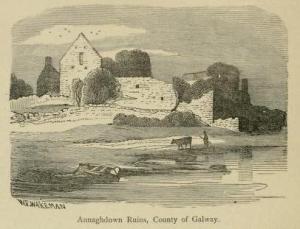
    February 10 is the feast of Saint Scholastica, twin sister of Saint Benedict, the father of western monasticism.  The pair enjoyed what modern scholar Jane Tibbetts Schulenburg has described as ‘perhaps one of the most famous examples of affection and love within the saintly sibling relationship’. I have always enjoyed how the Irish priest, Father Jerome Fahy, in an article on the Diocese of Annaghdown which you can read at the blog here, likened their relationship to that of the Irish saints Brendan and Bríg, describing them as ‘the Benedict and Scholastica of Ireland’. Unfortunately, whilst Saint Scholastica has her own day defined on the calendars of the saints, her Irish counterpart does not. There are over a dozen Irish female saints who share the name Bríg (Briga, Brígh), most of whom are untraceable. Canon O’Hanlon suggested in his entry for Saint Bríg of Coirpre on January 7 that she may be Brendan’s sister, but provided no supporting evidence. The place name Coirpre (Cairbre, modern Carbury) occurs in a number of different localities in Ireland. However, the Life of Saint Brendan clearly associates his sister with the County Galway monastery of Annaghdown, yet no feast for Bríg of Annaghdown is to be found on the calendars. Like other Irish female saints who have no written Life of their own, what we know of Bríg is drawn from the Life of her famous brother, just as our knowledge of Scholastica is founded on the Dialogues of Pope Saint Gregory the Great, who dedicated Book II of his four-volume collection on the lives and miracles of Italian saints to Saint Benedict. The Lives tell us that Saint Scholastica was the abbess of Plumbariola, just a few miles away from her brother’s foundation at Monte Cassino, whilst Bríga was at the convent of Annaghdown, County Galway, where the local church to this day remains dedicated to Saint Brendan. Scholastica seems to have visited her saintly sibling on an annual basis, the leadership of a monastic familia taking precedence over biological family ties for those dedicated to the religious life. As Jane Tibbetts Schulenburg points out:

    It was only with the realization of impending death that some of these male siblings finally felt free to see their sisters and express the affection which they had withheld for ascetic purposes during their lifetime. A primary focus of many of the vitae is on the saint’s final hours and deathbed scene: this was an especially important moment to be shared with one’s closest relatives and friends. Therefore, sisters and brothers often assumed a crucial role in the events surrounding the death of their saintly siblings: they were designated to carry out special instructions for burial; they remembered each other in prayers…; they frequently expressed a final wish that they be buried together, and promised each other that they would meet again in the celestial realm.

    Jane Tibbetts Schulenburg, Forgetful of Their Sex: Female Sanctity and Society, ca. 500–1100 (University of Chicago Press, 1998), 297.

    The author also points out a further trope found in a number of the vitae – the foreknowledge of a sibling’s death or a description of their arrival in heaven. This is the case with Saint Benedict and his sister, described below by Pope Saint Gregory the Great who first establishes the background to the death of Saint Scholastica. I noted here that it is the woman, Scholastica, who seems to meet with the writer’s approval rather than the  subject of the Life, Saint Benedict, much as another Irish woman saint, Cannera of Bantry, does in her encounter with Saint Senan of Scattery Island:

    CHAPTER THIRTY-THREE: Of a Miracle Wrought by his Sister, Scholastica.

    ….I must tell you how there was one thing which the venerable father Benedict would have liked to do, but he could not.

    His sister, named Scholastica, was dedicated from her infancy to our Lord. Once a year she came to visit her brother. The man of God went to her not far from the gate of his monastery, at a place that belonged to the Abbey. It was there he would entertain her. Once upon a time she came to visit according to her custom, and her venerable brother with his monks went there to meet her.

    They spent the whole day in the praises of God and spiritual talk, and when it was almost night, they dined together. As they were yet sitting at the table, talking of devout matters, it began to get dark. The holy Nun, his sister, entreated him to stay there all night that they might spend it in discoursing of the joys of heaven. By no persuasion, however, would he agree to that, saying that he might not by any means stay all night outside of his Abbey.

    At that time, the sky was so clear that no cloud was to be seen. The Nun, hearing this denial of her brother, joined her hands together, laid them on the table, bowed her head on her hands, and prayed to almighty God.

    Lifting her head from the table, there fell suddenly such a tempest of lightning and thundering, and such abundance of rain, that neither venerable Benedict, nor his monks that were with him, could put their heads out of doors. The holy Nun, having rested her head on her hands, poured forth such a flood of tears on the table, that she transformed the clear air to a watery sky.

    After the end of her devotions, that storm of rain followed; her prayer and the rain so met together, that as she lifted up her head from the table, the thunder began.  So it was that in one and the very same instant that she lifted up her head, she brought down the rain.

    The man of God, seeing that he could not, in the midst of such thunder and lightning and great abundance of rain return to his Abbey, began to be heavy and to complain to his sister, saying: “God forgive you, what have you done?” She answered him, “I desired you to stay, and you would not hear me; I have desired it of our good Lord, and he has granted my petition. Therefore if you can now depart, in God’s name return to your monastery, and leave me here alone.”

    But the good father, not being able to leave, tarried there against his will where before he would not have stayed willingly. By that means, they watched all night and with spiritual and heavenly talk mutually comforted one another.

    Therefore, by this we see, as I said before, that he would have had one thing, but he could not effect it.  For if we know the venerable man’s mind, there is no question but that he would have had the same fair weather to have continued as it was when he left his monastery.  He found, however, that a miracle prevented his desire. A miracle that, by the power of almighty God, a woman’s prayers had wrought.

    Is it not a thing to be marveled at, that a woman, who for a long time had not seen her brother, might do more in that instance than he could? She realized, according to the saying of St. John, “God is charity” [1 John 4:8]. Therefore, as is right, she who loved more, did more.

    This proves to be the last encounter between the siblings as the next chapter describes Saint Benedict’s vision of his sister’s death and his determination that they would remain united:

    CHAPTER THIRTY-FOUR: How Benedict Saw the Soul of his Sister Ascend into Heavenly Glory.

    GREGORY: The next day the venerable woman returned to her nunnery, and the man of God to his abbey. Three days later, standing in his cell, and lifting up his eyes to heaven, he beheld the soul of his sister (which was departed from her body) ascend into heaven in the likeness of a dove.

    Rejoicing much to see her great glory, with hymns and praise he gave thanks to almighty God, and imparted the news of her death to his monks.  He sent them presently to bring her corpse to his Abbey, to have it buried in that grave which he had provided for himself. By this means it fell out that, as their souls were always one in God while they lived, so their bodies continued together after their death.

    Gregory the Great (c. 540-604), Dialogues, Book II (Life and Miracles of St. Benedict).

    Sadly, the accounts of the Irish Benedict and Scholastica are not quite so detailed. In the Betha Brendain, the Irish Life of Saint Brendan, we first meet Saint Bríg when the young Brendan is studying with his foster father Bishop Erc and the hagiographer leaves us in no doubt about the strong bond of love between the siblings:

    (12) Brig, daughter of Findlug, his sister, was with him there, and great was his love for her, for he saw the attendance of angels above her.

    Having established this affectionate relationship between the siblings in childhood, it is at the end of his life that we encounter Saint Bríg once again:

    (206) Brendan after this went to visit his sister Brig at the fort of Aed son of Eochaid, which is now called Enach Duin. So then, after traversing sea and land, after raising dead men, healing lepers, blind, deaf, lame, and all kinds of sick folk, after founding many cells, and monasteries, and holy churches, after appointing abbots and masters, after blessing cataracts and estuaries, after consecrating districts and tribes, after putting down crimes and sins, after great perils by sea and land, after expelling demons and vices, after pre-eminence in pilgrimage and (ascetic) devotion, after performance of mighty works and miracles too numerous to mention, St. Brendan drew near to the day of his death.

    (207) Then said Brendan to the brethren after Mass on the Sunday, and after receiving the body of Christ and His blood: ‘God,’ said he, is calling me to the eternal kingdom; and my body must be taken to Clonfert, for there will be attendance of angels there, and there will be my resurrection…..

    (208) When he had finished saying all this, he blessed the brethren and his sister Brig, and when he reached the threshold of the church, he said: ‘In manus tuas, Domine,’ etc, Then he sent forth his spirit….

    C. Plummer, ed. and trans., Bethada Náem nÉrenn – Lives of Irish Saints, Vol. II (Oxford, 1922), 46; 91.

    It is at Annaghdown then, his beloved sister present among the monastic brethren, that Saint Brendan’s earthly life ends. I noted too how the hagiographer specifically named Saint Bríg as a recipient of her brother’s final blessing, thus putting her, along with Saint Scholastica, into the category of Sorores Sanctae identified by Tibbetts Schulenburg.

    Deus, qui beátae Vírginis tuæ Scholásticæ ánimam ad ostendéndam [innocéntiæ viam in colúmbæ spécie cælum penetráre fecísti: da nobis eius méritis et précibus ita innocénter vivere; ut ad ætérna mereámur gáudia perveníre. Per Dóminum.]

    Let us pray: O God, Who, to show the innocence of her life, didst cause the soul of Thy blessed Virgin Scholastica to ascend to Heaven in the form of a dove: grant, we beseech Thee, by her merits and prayers, that we may live so innocently, as to deserve to arrive at eternal joys. Through Jesus Christ, Thine only-begotten Son, Our Lord, Who with Thee and the Holy Ghost liveth and reigneth, God, for ever and ever.

    R. Amen.

    Collect for the Feast of Saint Scholastica, February 10.

    Content Copyright © Omnium Sanctorum Hiberniae 2012-2024. All rights reserved.
     

  • Saint Feber of Boho, November 6

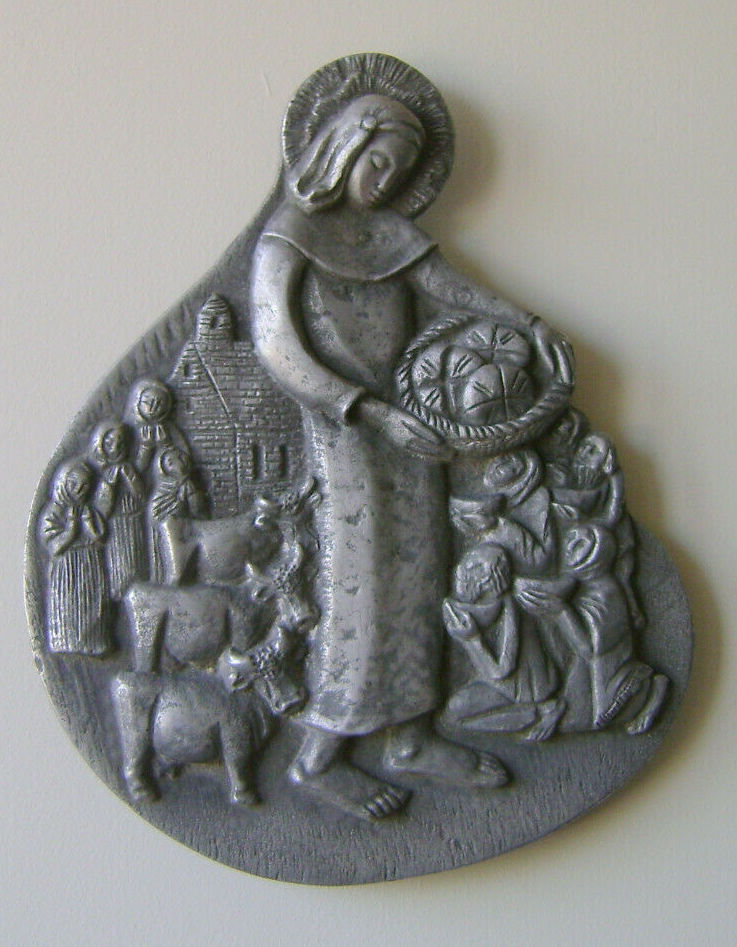
    November 6 is the Feast of All the Saints of Ireland but is also the day on which we commemorate a little-known female saint of County Fermanagh, Saint Feber (Feadhbhair, Feadhbar, Fedbair, Febor, Faber) of Boho. Since we have only four surviving written Lives of Irish women saints, stories of Saint Feber have mostly survived in popular tradition preserved in the place where she once flourished. Her name is recorded though in Irish genealogical sources and also on the calendars of the saints. The Martyrology of Gorman records the name ‘Fedbair’ at November 6 with an accompanying scholiast note describing her as ‘a virgin from Botha Eich Raichnig’. The Martyrology of Donegal replicates this with its entry for ‘Fedbair, Virgin of Botha-eich Uaichnich, in Tir-Rátha’. Pádraig Ó Riain in his Dictionary of Irish Saints tells us that the genealogies describe Feber as a daughter of Dallbhrónach, mother of a number of saints. Her family tree also makes Saint Feber an aunt to Saint Brigid of Kildare. and Ó Riain notes that Feber was ‘said to have been subject to Brighid at her church in the townland of Toneel, parish of Boho, which she shared with her sister Sanct Bhróg.’ However, it is to popular tradition that we must turn for further details of the establishment of a church by Saint Feber. Here we find some classic hagiographical tropes: the assistance of a wild animal and the righteous anger of the saint leading to the cursing of a river and its subsequent flowing against the hill.

    In a letter dated November 6, 1834, John O’Donovan of the Ordnance Survey wrote:

    The village of Monea is called in Irish Muine Fhiadh, i.e. Hill of the Deer. The name is accounted for by a story similar to those told to account for the names of old churches in Derry. The virgin St. Feber first attempted to build her church at Kildrum at the place where the holy well now called Tobar Feber is to be seen, but what had been built in the course of the day was destroyed in the night by some invisible being. At last a deer, blessed beast, was pleased to point out a site where Feber might erect her church without interruption. He carried Feber’s books on his horns to Monea, and there the holy virgin finished the erection of her church without annoyance. But when the deer was crossing the Sillees River (Abhainn na Sailíse) he slipped on its slippery banks and the books fell off his horns and it was sometime before he could fix them on again. This was effected by the genius or sheaver (shaver) who presided over the Sillees, who did all in his power to prevent the establishment of the Christian Religion in that neighbourhood. As soon as Feber had understood that the demon of the river thus annoyed the good beast, she was filled with holy indignation -she became much wroth – and with (in?) sanctified fury and heavenly anger, she cursed the River, praying that the Silleece might be cursed with sterility of fish and fertility in the destruction of human life, and that it might run against the hill. 

    Rev. M. O’Flanagan, Letters Containing Information Relative to the Antiquities of the County of Fermanagh: Collected During the Progress of the Ordnance Survey in 1834-5 (1928), 54-5.

    A more recent commentator suggests that O’Donovan’s version of the Saint Feber, the stag and the river story was not the only one. Henry Glassie points out:

    In O’Donovan’s telling, Saint Febor’s opponent was supernatural, more often her opponent is human – a local chief – but her three curses end most tellings.

    He then goes on to give us the version from the autobiography of William K. Parke, a native of Derrygonnelly, County Fermanagh. Derrygonnelly is a town on the Sillees River, whose flowing against the hill Parke explains by telling the story of 

    “a lady saint known as Saint Faber”, who roamed the area with her pet deer, “endeavouring to convert the locals to Christianity”.  Her main objective was the local chief, O’Phelan, who “wanted nothing to do with this new fangled religion”. He ordered his servants to release the dogs on her. She fled, attempted to leap the Sillees, failed, her holy books were destroyed, and she cursed the river. The curses were that the river was to be dangerous for bathers, bad for fishing and to flow for ever against the hill.

    Glassie also cited another version of the tale from the same author. The quote above was taken from Parke’s 1988 autobiography Fermanagh Childhood , but in Glimpses of Old Derrygonnelly, published a decade earlier, Parke quoted from an old article from the local newspaper, The Impartial Reporter

    “St Faber fleeing from her enemies raised her staff cursing the water to be turned back so that she could save her deer carrying the Holy Books. The river ran on as far as Lisgoole Abbey where the monks met it and turned it into Lough Erne”.

    Henry Glassie, The Stars of Ballymenone, new edition, (Indiana University Press, 2016), footnote, p.483.

    The three curses of Saint Feber are part of a tradition of saintly malediction found in medieval hagiography in general, but a feature of the Lives of Irish saints in particular. I spoke about the context in which our saints utter curses on Episode 30 of the radio programme All the Saints of Ireland, which you can find at the podcast library of Radio Maria Ireland here. As I explained, cursing usually arises as a response to the dignity of the saint being disrespected. That is clearly the case here, where the chieftain aggressively attempts to thwart the saint’s missionary work and she invokes the judgement of God, not against the man, but against the river which endangered her animal companion and the holy books he carried. As I remarked on the radio broadcast, the cursing of things, food-producing sources such as rivers or trees, may owe something to the cursing of the fig tree by Christ on his way to Jerusalem. There is thus nothing unusual in this episode of Saint Feber and the Sillees, we see instances in other saints Lives of the cursing of rivers so that fish will not be caught.  It’s also true that unusual natural features in the environment are often attributed to the actions of saints, in this case the flowing of the Sillees against the hill. It is worth noting, however, that cursing is predominantly a male preserve in the Lives of the Irish saints but Saint Feber seems every bit as capable as any male saint. In the newspaper account the raising of her staff, the symbol of her authority, to pronounce the curse is also in keeping and reflects the ritualistic aspect of uttering maledictions. 

    A final observation is that the saint’s memory continues to be reflected in the landscape around Boho, In addition to the Tobar Feber there is a bullaun associated with the saint preserved at Killydrum townland. She is the patron of the Sacred Heart Church at Boho, one of the very few historic church sites still in Catholic hands. The parish website here adds some other details to Saint Feber’s story, claiming that she was the daughter of a local druid who was converted to Christianity by Saint Molaise of Devenish. It says too that the holy well of Saint Feber has a particular reputation for curing warts. There is a second well at Monea and Saint Feber is also the patron of the Catholic parish church there.

    So, although not much historical information has survived about this female saint of Fermanagh, her memory is still very much alive in the place where she once flourished.

    Content Copyright © Omnium Sanctorum Hiberniae 2012-2024. All rights reserved.
  • Saint Bríg of Annaghdown: Ireland's Saint Scholastica

    February 10 is the feast of Saint Scholastica, twin sister of Saint Benedict, the father of western monasticism.  The pair enjoyed what modern scholar Jane Tibbetts Schulenburg has described as ‘perhaps one of the most famous examples of affection and love within the saintly sibling relationship’. I have always enjoyed how the Irish priest, Father Jerome Fahy, in an article on the Diocese of Annaghdown which you can read at the blog here, likened their relationship to that of the Irish saints Brendan and Bríg, describing them as ‘the Benedict and Scholastica of Ireland’. Unfortunately, whilst Saint Scholastica has her own day defined on the calendars of the saints, her Irish counterpart does not. There are over a dozen Irish female saints who share the name Bríg (Briga, Brígh), most of whom are untraceable. Canon O’Hanlon suggested in his entry for Saint Bríg of Coirpre on January 7 that she may be Brendan’s sister, but provided no supporting evidence. The place name Coirpre (Cairbre, modern Carbury) occurs in a number of different localities in Ireland. However, the Life of Saint Brendan clearly associates his sister with the County Galway monastery of Annaghdown, yet no feast for Bríg of Annaghdown is to be found on the calendars. Like other Irish female saints who have no written Life of their own, what we know of Bríg is drawn from the Life of her famous brother, just as our knowledge of Scholastica is founded on the Dialogues of Pope Saint Gregory the Great, who dedicated Book II of his four-volume collection on the lives and miracles of Italian saints to Saint Benedict. The Lives tell us that Saint Scholastica was the abbess of Plumbariola, just a few miles away from her brother’s foundation at Monte Cassino, whilst Bríga was at the convent of Annaghdown, County Galway, where the local church to this day remains dedicated to Saint Brendan. Scholastica seems to have visited her saintly sibling on an annual basis, the leadership of a monastic familia taking precedence over biological family ties for those dedicated to the religious life. As Jane Tibbetts Schulenburg points out:

    It was only with the realization of impending death that some of these male siblings finally felt free to see their sisters and express the affection which they had withheld for ascetic purposes during their lifetime. A primary focus of many of the vitae is on the saint’s final hours and deathbed scene: this was an especially important moment to be shared with one’s closest relatives and friends. Therefore, sisters and brothers often assumed a crucial role in the events surrounding the death of their saintly siblings: they were designated to carry out special instructions for burial; they remembered each other in prayers…; they frequently expressed a final wish that they be buried together, and promised each other that they would meet again in the celestial realm.

    Jane Tibbetts Schulenburg, Forgetful of Their Sex: Female Sanctity and Society, ca. 500–1100 (University of Chicago Press, 1998), 297.

    The author also points out a further trope found in a number of the vitae – the foreknowledge of a sibling’s death or a description of their arrival in heaven. This is the case with Saint Benedict and his sister, described below by Pope Saint Gregory the Great who first establishes the background to the death of Saint Scholastica. I noted here that, unusually for hagiography, it is the woman, Scholastica, who seems to meet with the writer’s approval rather than the  subject of the Life, Saint Benedict:

    CHAPTER THIRTY-THREE: Of a Miracle Wrought by his Sister, Scholastica.

    ….I must tell you how there was one thing which the venerable father Benedict would have liked to do, but he could not.

    His sister, named Scholastica, was dedicated from her infancy to our Lord. Once a year she came to visit her brother. The man of God went to her not far from the gate of his monastery, at a place that belonged to the Abbey. It was there he would entertain her. Once upon a time she came to visit according to her custom, and her venerable brother with his monks went there to meet her.

    They spent the whole day in the praises of God and spiritual talk, and when it was almost night, they dined together. As they were yet sitting at the table, talking of devout matters, it began to get dark. The holy Nun, his sister, entreated him to stay there all night that they might spend it in discoursing of the joys of heaven. By no persuasion, however, would he agree to that, saying that he might not by any means stay all night outside of his Abbey.

    At that time, the sky was so clear that no cloud was to be seen. The Nun, hearing this denial of her brother, joined her hands together, laid them on the table, bowed her head on her hands, and prayed to almighty God.

    Lifting her head from the table, there fell suddenly such a tempest of
    lightning and thundering, and such abundance of rain, that neither venerable Benedict, nor his monks that were with him, could put their heads out of doors. The holy Nun, having rested her head on her hands, poured forth such a flood of tears on the table, that she transformed the clear air to a watery sky.

    After the end of her devotions, that storm of rain followed; her prayer and the rain so met together, that as she lifted up her head from the table, the thunder began.  So it was that in one and the very same instant that she lifted up her head, she brought down the rain.

    The man of God, seeing that he could not, in the midst of such thunder and lightning and great abundance of rain return to his Abbey, began to be heavy and to complain to his sister, saying: “God forgive you, what have you done?” She answered him, “I desired you to stay, and you would not hear me; I have desired it of our good Lord, and he has granted my petition. Therefore if you can now depart, in God’s name return to your monastery, and leave me here alone.”

    But the good father, not being able to leave, tarried there against his will where before he would not have stayed willingly. By that means, they watched all night and with spiritual and heavenly talk mutually comforted one another.

    Therefore, by this we see, as I said before, that he would have had one thing, but he could not effect it.  For if we know the venerable man’s mind, there is no question but that he would have had the same fair weather to have continued as it was when he left his monastery.  He found, however, that a miracle prevented his desire. A miracle that, by the power of almighty God, a woman’s prayers had wrought.

    Is it not a thing to be marveled at, that a woman, who for a long time had not seen her brother, might do more in that instance than he could? She realized, according to the saying of St. John, “God is charity” [1 John 4:8]. Therefore, as is right, she who loved more, did more.

    This proves to be the last encounter between the siblings as the next chapter describes Saint Benedict’s vision of his sister’s death and his determination that they would remain united:

    CHAPTER THIRTY-FOUR: How Benedict Saw the Soul of his Sister Ascend into Heavenly Glory.

    GREGORY: The next day the venerable woman returned to her nunnery, and the man of God to his abbey. Three days later, standing in his cell, and lifting up his eyes to heaven, he beheld the soul of his sister (which was departed from her body) ascend into heaven in the likeness of a dove.

    Rejoicing much to see her great glory, with hymns and praise he gave thanks to almighty God, and imparted the news of her death to his monks.  He sent them presently to bring her corpse to his Abbey, to have it buried in that grave which he had provided for himself. By this means it fell out that, as their souls were always one in God while they lived, so their bodies continued together after their death.

    Gregory the Great (c. 540-604), Dialogues, Book II (Life and Miracles of St. Benedict).

    Sadly, the accounts of the Irish Benedict and Scholastica are not quite so detailed. In the Betha Brendain, the Irish Life of Saint Brendan, we first meet Saint Bríg when the young Brendan is studying with his foster father Bishop Erc and the hagiographer leaves us in no doubt about the strong bond of love between the siblings:

    (12) Brig, daughter of Findlug, his sister, was with him there, and great was his love for her, for he saw the attendance of angels above her.

    Having established this affectionate relationship between the siblings in childhood, it is at the end of his life that we encounter Saint Bríg once again:

    (206) Brendan after this went to visit his sister Brig at the fort of Aed son of Eochaid, which is now called Enach Duin. So then, after traversing sea and land, after raising dead men, healing lepers, blind, deaf, lame, and all kinds of sick folk, after founding many cells, and monasteries, and holy churches, after appointing abbots and masters, after blessing cataracts and estuaries, after consecrating districts and tribes, after putting down crimes and sins, after great perils by sea and land, after expelling demons and vices, after pre-eminence in pilgrimage and (ascetic) devotion, after performance of mighty works and miracles too numerous to mention, St. Brendan drew near to the day of his death.

    (207) Then said Brendan to the brethren after Mass on the Sunday, and after receiving the body of Christ and His blood: ‘God,’ said he, is calling me to the eternal kingdom; and my body must be taken to Clonfert, for there will be attendance of angels there, and there will be my resurrection…..

    (208) When he had finished saying all this, he blessed the brethren and his sister Brig, and when he reached the threshold of the church, he said: ‘In manus tuas, Domine,’ etc, Then he sent forth his spirit….

    C. Plummer, ed. and trans., Bethada Náem nÉrenn – Lives of Irish Saints, Vol. II (Oxford, 1922), 46; 91.

    It is at Annaghdown then, his beloved sister present among the monastic brethren that Saint Brendan’s earthly life ends. I noted too how the hagiographer specifically named Saint Bríg as a recipient of her brother’s final blessing, thus putting her, along with Saint Scholastica, into the category of Sorores Sanctae identified by Tibbetts Schulenburg.

    Deus, qui beátae Vírginis tuæ Scholásticæ ánimam ad ostendéndam [innocéntiæ viam in colúmbæ spécie cælum penetráre fecísti: da nobis eius méritis et précibus ita innocénter vivere; ut ad ætérna mereámur gáudia perveníre. Per Dóminum.]

    Let us pray: O God, Who, to show the innocence of her life, didst cause the soul of Thy blessed Virgin Scholastica to ascend to Heaven in the form of a dove: grant, we beseech Thee, by her merits and prayers, that we may live so innocently, as to deserve to arrive at eternal joys. Through Jesus Christ, Thine only-begotten Son, Our Lord, Who with Thee and the Holy Ghost liveth and reigneth, God, for ever and ever.

    R. Amen.

    Collect for the Feast of Saint Scholastica, February 10.

    Content Copyright © Omnium Sanctorum Hiberniae 2012-2024. All rights reserved.