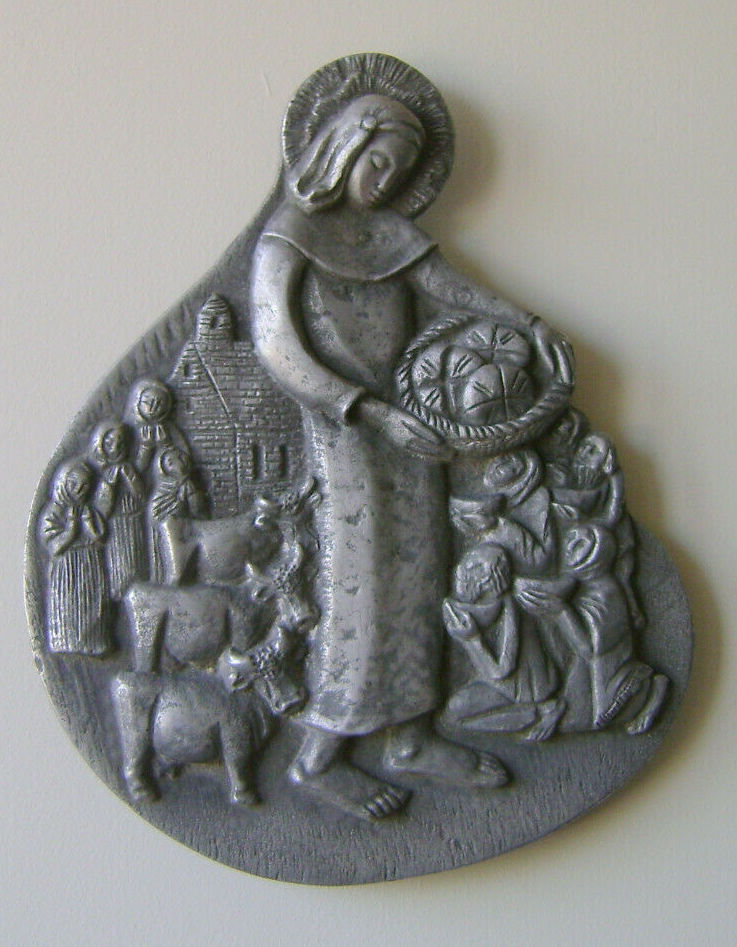
At my blog dedicated to the Three Wonderworking Patrons of Ireland I have been looking at some of the wonders worked by Saint Brigid where bishops are mentioned. The opening episode is particularly interesting as its shows her unafraid to speak her mind in the presence of senior male clerics:
Brigid is credited with an epigrammatic mode of speech and a certain imperiousness of manner, even with bishops. Once a bishop, with some companions, came to her convent to deliver a sermon. They had come a long journey and greeted her with the news that they were hungry.“So are we hungry—for instruction,” she answered. “Go into church and speak first, and then you shall eat.”
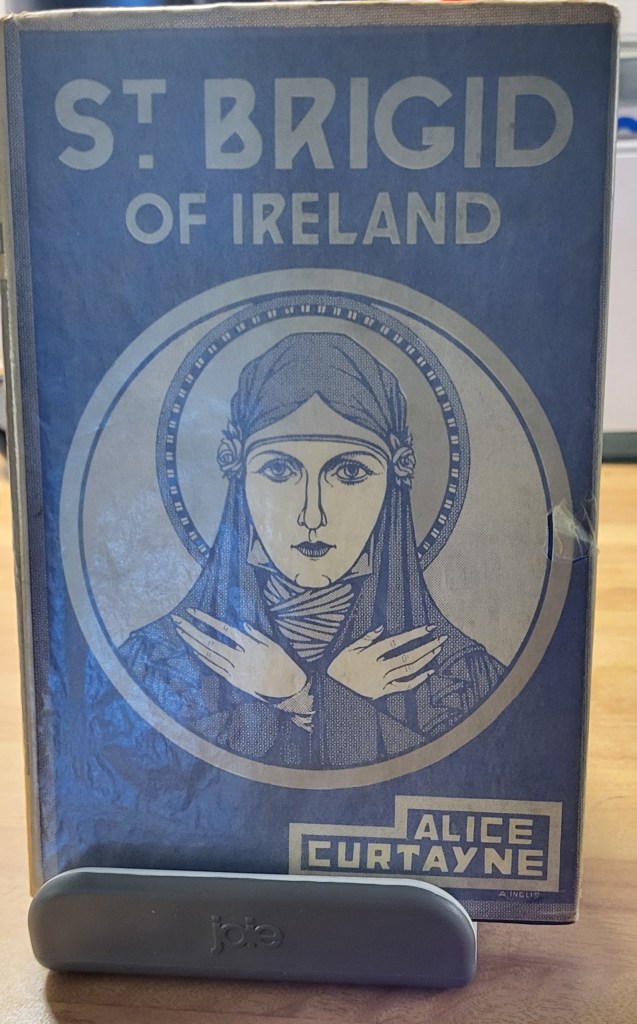
Other miracles offer more standard hagiographical fare. The miraculous provision of plenty is one of the most common tropes found in the lives of medieval saints. These miracles testify to the faith of the saints, to their trust in God’s providence and to their status as God’s favoured servants. Saint Brigid’s reputation in hagiography is one of generosity, as the following episode recounted by Alice Curtayne testifies:
Once seven bishops together went to visit her, and they have gone down into fame as the Seven Bishops of Cabinteely. Do you suppose that Brigid was disturbed by this invasion of the episcopacy? It would not appear so. She sent one sister to the cows that had already been milked twice that day; and another sister to a larder that was as deplenished as Mother Hubbard’s; and another sister to an ale-vat that was drained dry. Yet the bishops feasted adequately, for food was a commodity Brigid never failed to find for her guests.
The monastic virtue of hospitality is also on display in this miracle involving Bishop Bron of Killaspugbrone, County Sligo.
There is a charming story told of one Bishop Bron, who, journeying to Brigid with some companions, lost his way. Finding themselves stranded in a wilderness at nightfall, they were forced to sleep in the open. Then all were comforted by the same dream. They thought (as they drowsed in exhausted and chill discomfort) that through the darkness and wild weather they beheld the lights of Brigid’s settlement and that, stumbling to it, they saw her come smiling to the cashel gates to lavish upon them the hospitality for which she was famous. First the feet of the footsore guests were washed and then, installed in repose, warmth, security, they were given good food in that delightful atmosphere of solicitude that was peculiarly Brigid’s. So restful was this dream, the pilgrims suffered not in the least from their night’s exposure. They were even refreshed, and with daylight they hopefully resumed their trudge. And lo! at a turn of the road, their hearts soared to see the familiar figure in white driving towards them. Brigid, having been supernaturally warned, had come out to rescue them from their plight.
Bishop Bron featured in another miracle involving Saint Brigid, which Alice Curtayne does not recount in her book, but which you can find on the blog here.
Alice Curtayne ends her chapter on Brigid and the Bishops with this tribute:
Brigid’s achievements and power, when contrasted with her total lack of training, stand out most singularly. In this display of creative genius, she had plainly divine gifts.The bishops did not wait for a decree of canonisation to acclaim what was so manifest to all men. But when it was discovered that she possessed, too, a genuine discernment of souls, people began to flock to her from all sides. Not the bishops only, but all the great in the land, pagans and Christians, and the humble, too, sought her out.
Alice Curtayne, St. Brigid of Ireland (Dublin, 1933).
https://triasthaumaturga.blogspot.com/2026/02/brigid-and-bishops-ii.html

 OMNIUM SANCTORUM HIBERNIAE