Category: Irish Saints

  • Saint Giallán of Killelan, October 2

    October 2 is the second commemoration on the Irish calendars of a County Kildare saint, Giallán of Killelan. His earlier feast day is September 6 at which time I posted the following information regarding him:

    Professor Pádraig Ó Riain, in his 2011 Dictionary of Irish Saints reveals that the saint is associated with the County Kildare locality of Killelan, probably originally Ceall Ghialláin. The Giallán of this place is described in a scribal note found in the Martyrology of Tallaght at October 2 which refers to a Leinster prince called Oinmhe, a hostage with Saint Brigid of Kildare. He is then renamed Giallán, from the Irish word for a hostage giall. October 2 seems to be the main commemoration of Saint Giallán, but his name is recorded on September 6 in the Martyrology of Tallaght, although this is the only Irish calendar where it appears on this day.

    The scribal note records how the prince was given as a hostage, first to another ruler and then subsequently to Saint Brigid, in order to secure the submission of his father:

    [OCTOBER 2]

    Onme (i.e. simul) or Omne son of the king of Leinster. And he was given as a hostage to the king of Leth Cuind, and he gave him into Brigit’s hand that she might on his account obtain submission a patre suo, et aliquo die dixerunt discipulae Brigitae ei: ‘ ’tis lovely the little hostage (giallán) is to-day,’ said they. ‘Giallán will be his name for ever,’ said Brigit. And that is the one who is in Cell Giallain in Ui Muiridaig.

    It seems that the little hostage made quite an impression on Saint Brigid and her household!


    Content Copyright © Omnium Sanctorum Hiberniae 2012-2015. All rights reserved.
  • Saint Colman of Comhruire, September 25

    September 25 is the feast day of yet another Irish Saint Colman, this one associated with the founding of a church at Uisneach Hill, County Westmeath. Canon O’Hanlon supplies the details, including a second entry for the saint from the Martyrology of Tallaght:

    St. Colman of Comhruire, now Kilcomreragh, at Uisneach Hill, County of Westmeath.

    [Seventh Century.]

    The name Colman, being a diminutive of Colum or Colm—a contraction for Columba—was very frequently applied to very many of our early Irish Saints. The name Colman, Comraire, appears in the Martyrology of Tallagh, as having veneration paid him, at the 25th of September. The like entry is in the Book of Leinster copy. The feast of Colman is entered in the Feilire of Marianus O’Gorman, at the 25th of September, and the commentator says, i.e., Colman Comhruire—rendered Colman of the Casket. Bronach, daughter to Miliuc, son of Buan, with whom Patrick was in bondage, is said to have been his mother. Again, it is related, that his mother was Galges, daughter of Aedh-finn or Hugh the White, prince of Hybruinn. He is said to have been the son of Fintan, and grandson of Finloga, prince of South Munster. His brother was the celebrated St. Fursa or Fursey, who preached and founded monasteries in England and France. Uisneach was in the parish of Killare, barony of Rathconrath and county of Westmeath. It is now known as Usnagh hill, and somewhere in its vicinity, Comhruire must be sought. This place was also called Comhraire-Midhe, and it is now known as Kilcomreragh, near the hill of Uisneach. The church there is said to have been founded early in the seventh century, by the present Saint. It seems likely he died during that period, or perhaps early in the eighth century. The death of Abbot Ferfio of Comhraire-Midhe, is recorded, at A.D. 757. Comraire monastery seemed not to have survived the Danish invasions. The history of St. Colman, and the year of his death, do not appear to be known. He is recorded in the Martyrology of Donegal, at this same date as Colman, of Comhruire, at Uisneach.

    Reputed St. Colman, Sci.

    The Martyrology of Tallagh, registers St. Colman, Sci., as having been venerated, at the 25th of September. In like manner, we meet such an insertion in the Book of Leinster copy. As we do not meet this distinctive entry in any other Irish Calendar, it seems to have been a superfluous notice, and only intended to commemorate the preceding saint.

    Content Copyright © Omnium Sanctorum Hiberniae 2012-2015. All rights reserved.

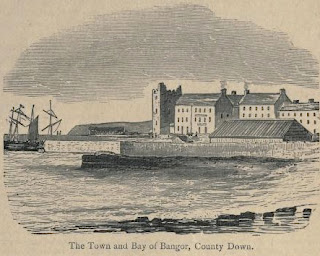
  • Saint Cuimmen of Bangor, September 17

    September 17 is the commemoration of an abbot of Bangor, County Down, whom Canon O’Hanlon believed was one of the victims of the great plague of the seventh century:

    St. Cuimmen, Abbot of Bangor, County of Down.

    [Seventh Century.]

    A festival in honour of Cummine, Abbot, of Damoirne, is set down, in the Martyrologies of Tallagh, of Marianus O’Gorman, and of Cathal Maguire, at the 17th of September. A great plague broke out, A.D. 666, and during its continuance it is said, no less than four abbots at Bangor—one after the other—succumbed, namely Bearach, Cummine, Colum and Aedhan. From what has been stated already, we may take it for granted, following the order of enumeration, that Cummine immediately succeeded Bearach and immediately preceded Colum, in the government of this monastery. He could not have discharged this duty more than a few months, and he died probably on the 17th of September, the date for his festival. It would seem, that another Abbot of the same house named Critan died within a very short interval. In the Martyrology of Donegal, the present saint is recorded, at the 17th of September, as Cuimmen, Abbot of Bennchor.

    Content Copyright © Omnium Sanctorum Hiberniae 2012-2015. All rights reserved.