On September 25 we commemorate a northern saint of the Ards peninsula, Iomchaidh of Kill Drochoid. His name appears on the earliest of the Irish calendars, the Martyrology of Tallaght, at this date and the 12th-century Martyrology of Gorman adds ‘of Cell droichit in Ard Ulad’. The Anglican scholar bishop, William Reeves, notes the feast of Saint Iomchaidh on the calendar of saints he appended to his work on the Ecclesiastical Antiquities of Down, Connor and Dromore, and comments:
Kill Droichid, – ‘Church of the Bridge’. Now unknown. There is no river in the Ards deserving a bridge except the Blackstaff which divided the Great and Little Ards. Near this was the chapel of Gransha. (note d, p.380).
The Catholic diocesan historian, Father James O’Laverty, made another suggestion in Volume 1 of his Historical Account of the Diocese of Down and Connor:
In the townland of Lisban there are the remains of an extensive early Christian cemetery; its site is now in part occupied by the house and farmyard of Mr. Patrick M’Grath, into the wall of whose stable is built a stone, on which is inscribed a cross. The graves in that cemetery were lined and covered with flag-stones, and in many of them were found remains of the ferns, on which were cushioned the heads of the dead. This was probably the site of “the chapel of Moyndele,” which, with the church of Ardkeen, was valued in the Taxation of Pope Nicholas at ten marks.
There was in the Ards a church called Kil-droichid (the Church of the Bridge), in which the festival of St. Iomchaidh was celebrated on the 25th of September —”Iomchaidh of Cill-droichit in Ard Uladh.” There is no river in the Ards which in ancient times would have been spanned by a bridge except, perhaps the Blackstaff, but it is probable that a bridge may have been built over an inlet of Lough Strangford, immediately below the site of this ancient church, in the townland of Lisban, which therefore may, with probability, lay claim to be the Kill-droichid of St. Iomchaidh.
In the townland of Gransha (Grainseach—a grange) was an ancient church, which, as it stood not far from the Blackstaff River, may have been the Kill droichid already referred to… (p.424-425).
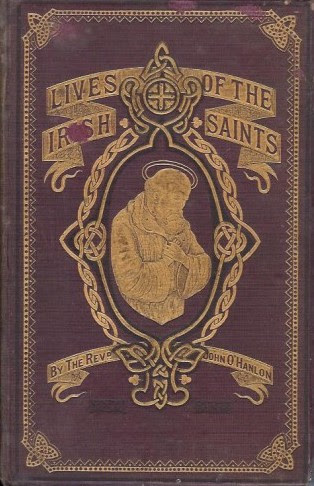
In his account in Volume 9 of the Lives of the Irish Saints, Canon O’Hanlon can do no more then reprise this information:
St. Iomchaidh, of Kill Drochoid, County or Down.
In the published Martyrology of Tallagh, as also in the Book of Leinster copy, we find the simple entry, Imchad, at the 25th of September. In the Feilire of Marianus O’Gorman, his name, place and feast are entered at the 25th of September. From the name of this Saint’s locality, it must be Anglicised, “Church of the Bridge.” Doubt exists as to the exact place where this Saint had been venerated, within that peninsula called the Ards of Ulster. There is no river in the Ards, deserving a bridge, except the Blackstaff, which divides the Great and Little Ards. The chapel of Grangia or Gransha, a townland at the south end of Inishargy parish, was situated near the Blackstaff river. The name of Iomchaidh is also entered in the Martyrology of Donegal, at this same date, as being of Cilldroichit, in Ard Uladh.
Content Copyright © Omnium Sanctorum Hiberniae 2012-2015. All rights reserved.

 OMNIUM SANCTORUM HIBERNIAE