Author: Michele Ainley

  • ‘Benedict, a strong pillar’


    Although there are a number of Irish saints commemorated on July 11, I found myself interested in the noting on some of our native calendars of the feast of the Translation of the Relics of Saint Benedict. Although the major feast of the father of western monasticism fell on the day of his natalis, March 21, at which date it was recorded in the Martyrology of Aengus, the Martyrology also commemorated the second feastday of Saint Benedict, that of the translation of his relics, on July 11. I was struck by how Saint Aengus the Martyrologist brings together the saints of the East, the West and of Ireland on this day, for the entry sandwiches ‘Benedict, a strong pillar’ between the names of the Great Martyr Euphemia and a local saint, Failbe, from Dísert maic Con-lócha in County Westmeath:

    C. v. idus Iulii.
    La martrai na rígnae
    Eufemiae slógdae,
    Benedicht, bale áge,
    macc craíbdech Con-lógae.

    11. With the martyrdom of the queen,
    Euphemia the hostful,
    Benedict, a strong pillar,
    Cu-lógae’s devout son.

    The scholiast comment is simply this: Benedict, i.e. caput monachorum etc.

    The later Martyrology of Marianus O’Gorman, written in the 12th century, spells out the title of the feastday:

    11. C.
    Translait cuirp in clerigh
    Benedict as mbage.

    11. C.
    The translation of the body of the cleric
    Benedict whom thou proclaims.

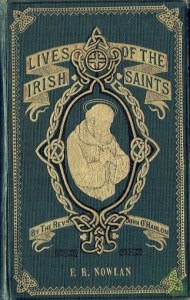
    Canon O’Hanlon has a short paragraph in Volume 7 of The Lives of the Irish Saints too:

    Translation of St. Benedict’s Relics.

    In the “Leabhar Breac” copy of the “Feilire,” by St. Aengus, there is a record of St. Benedict’s festival, at the 11th of July. Furthermore, a scholion informs us, that he was Benedict, the Father of Monks. Usuard and other ancient Martyrologists have it as the festival for a Translation of his relics, as the Bollandists note at this day. They refer, however, to his chief feast, at the 21st of March for an exhaustive illustration of his Acts. Also, in Usuard is to be found, at this same date, a Translation of the relics of his sister Scholastica, whose chief festival and Acts are noticed, on the 10th of February.

    Content Copyright © Omnium Sanctorum Hiberniae 2012-2015. All rights reserved.
  • Saint Senan, July 10

    The name of a Saint Senan is recorded on the Irish calendars at July 10. The most famous saint of this name is the patron of Scattery Island but it is one he shares with at least twenty others. As Canon O’Hanlon explains, we have no other information about the saint Senan commemorated on July 10:

    St. Senan.

    The name of Senan is set down in the Martyrologies of Tallagh  and of Donegal, at the 10th of July. With other saints of this name, Colgan notes him, but without any further distinction. The Bollandists have an entry, at this date, regarding him.


    Content Copyright © Omnium Sanctorum Hiberniae 2012-2015. All rights reserved.

  • Vespers Antiphons from the Office of Saint Killian

    Some selections from an Office of Saint Killian have been recorded by the medieval music ensemble Altramar. The trail of the Irish perigrini forms the theme of their collection Celtic Wanderers: The Pilgrim’s Road. They have recorded selections from liturgical offices for Irish saints from a 12th-century Hiberno-Latin manuscript found at Vienna’s Schottensift or ‘Monastery of the Scots’. Below are the notes and texts from the booklet which accompanies the recording, you can find details of all the tracks plus hear samples of the music here.

    I Vespers: Antiphons from the Office of St Killian

    Text and music: Vienna, Schottenstift, Kilian Fragment (12C)

    St Kilian (who became bishop of Würzburg) and his companions Colman and Totnan were Irish peregrini who traveled and proselytized in the areas of Franconia and East Thuringia, where they were martyred sometime around the year 689. The Vespers antiphons heard here are from an office for St Kilian found in one of the fragmentary manuscripts in the archive of the Schottensift in Vienna. These unusual and beautiful melodies did not survive intact: there are missing notes here and there, which required some educated guesswork and creative reconstruction. We chose to present some of these Vespers antiphons and the following Matins antiphons with voice and instrument, as medieval texts and illustrations indicate that stringed instruments may have been used to accompany Celtic liturgical music.

    O Christi martir 

    O Christi martir Sancte Kiliane, qui pro dei nomine
    certando coronam aeterni decoris meruisti
    omnes tua celebrantes sollempnnia tuo interventu gaudium
    in celo exultent se habere perpetuum.

    O martyr of Christ, saint Kilian, who by contending
    for the name of God earned a crown of eternal honour,
    may all who celebrate your rites rejoice
    that by your intervention they have joy in heaven forever.

    Chorus resonet

    Chorus resonet iubilantium regi martyrum
    qui beato Kyliano cum suis sociis
    victoriam contulit passionis.

    Let the chorus resound of those shouting for joy to the invincible king of martyrs,
    the king who conferred on blessed Kilian along with his companions
    the victory of martyrdom.

    Content Copyright © Omnium Sanctorum Hiberniae 2012-2015. All rights reserved.