Month: September 2014

  • The Daughters of Cainnech, September 24

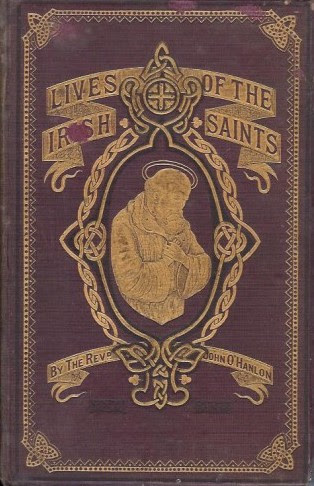
    When I first saw the notice for The Daughters of Cainnech in the list of contents of saints commemorated on September 24 in Volume 9 of the Lives of the Irish Saints, I assumed that Canon O’Hanlon would be unable to bring us any details apart from the notices from the calendars. In this case, however, a County Waterford priest had written to the author with details of the lineage and locality of these holy women, whom he linked to Saint Declan. Cainnech’s daughters are only one of a number of similar filial groupings recorded on the Irish calendars, the most famous of which is probably the Daughters of Leinin, whose name lives on in the County Dublin placename now Anglicized as Killiney. In some of these cases, like Leinin’s daughters or the Daughters of Comgall who are commemorated on January 22, tradition records the names of the individuals who make up the group. That doesn’t seem to be the case here, but the locality where the daughters of Cainnech flourished is firmly identified with Molough, near Clonmel, County Tipperary. In the 14th century the Butler family founded a nunnery dedicated to Saint Brigid of Kildare on the site, and I have reproduced the details and sketch of the ruins.

    The Daughters of Cainnech, or Maghlocha, County of Tipperary. [Sixth Century.]

    According to the manuscript and published Martyrology of Tallagh, the Daughters of Cainnech had veneration paid them, at the 24th of September. The Martyrology of Marianus O’Gorman commemorates the festival of Cainnech’s chaste daughters, at this same day. The glossographer adds, that they belonged to Maigh Locha. Their parentage and locality have been fully identified. These holy women were the children of a chieftain who lived in the time of St. Declan, patron of Ardmore, and whose castle had been saved from fire by the latter. Their place was formerly called Magh Locha, now Molough, near the great bend of the River Suir, and not many miles from Clonmel, in the County of Tipperary. There they seem to have lived in religious retirement, most probably some time in the sixth century. Of their lives, however, we find no record.

    Long after that time, their place is said to have been the site for a nunnery, dedicated to St. Brigid, in the former diocese of Lismore. It is mentioned by Archdall, as being in the County of Tipperary; but, he is wrong in placing it near Carrick-on-Suir. The ruins of the old nunnery of Moylough are situated on level ground, about one furlong north of the River Suir. In the year 1840, two parts of this building remained, viz., a chapel and a lateral house; but, from the fragments of walls about them, it appeared to have been a habitation of considerable extent. The church or chapel remaining was then in a tolerable state of preservation, extending from east to west, and measuring in length on the inside 60 feet, in breadth it was 27 feet, 6 inches. Two windows were in the east gable, constructed of chiselled and brownish sand-stone. There were three windows on the southwall, but these were much disfigured and built up with rough masonry. The door-way was on the south wall, and at a distance of fourteen feet from the west gable; it was constructed of chiselled and ornamental lime-stone on the outside, and of chiselled sand-stone on the inside. The west gable had been surmounted by a belfry, having two semi-circular arches, constructed of brownish and chiselled sand-stone. The lateral house extended to the northwest of the chapel, and touching it at the north-west corner. It was fifty-five feet in length on the outside, and twenty-seven in breadth. Its walls were three feet six inches in thickness, and about fourteen feet in height.

    In the Martyrology of Donegal, their festival is also inserted, at the 24th of September.

    Content Copyright © Omnium Sanctorum Hiberniae 2012-2015. All rights reserved.
  • Saint Connich Mic Luachain, September 23

    September 23 is the feast of one of the most learned and gifted saints Ireland ever produced, Adamnan of Iona. He shares his feastday on the Irish calendars with two lesser-known male saints, one of whom is a Saint Connich or Conaing Mic Luachain. As Canon O’Hanlon’s entry for this saint will make clear, his precise identity has not been established. The earliest of the calendars, the Martyrology of Tallaght, simply gives the name Connich and adds the patronymic ‘mic Luachain’, son of Luachan, without any further specifics. The great 17th-century hagiologist, Father John Colgan, suggested that our saint may be the same individual as a Saint Conaing who features in the hagiography of Saint Mochoemoc. It was also suggested that he may have been a saint of this name who is mentioned in the Life of Saint Molagga. Canon O’Hanlon himself plumps for the notion that he is the Conaing Ua Daint, successor to Saint Ailbhe of Emly, whose death is recorded in various Irish annals between 657 and 660. None of these sources, however, seem to include the use of the saint’s distinguishing patronymic, and although Canon O’Hanlon does not come out and say so, it seems that we cannot identify the Connich or Conaing commemorated on September 23 with any certainty:


    St. Conaing, or Connich Mic Luachain.

    The manuscript and published Martyrologies of Tallagh register a festival, at the 23rd of September, in honour of Connich, son of Luachain. He is also entered at this date in the Martyrology of Marianus O’Gorman, whose commentator calls him Mac Lucunain, or the Son of Lucunain. In Colgan’s opinion, the present holy man appears to be identical with a certain Conagius, who is mentioned in the Acts of St. Mochoemoc, Abbot of Liathmor. He is also thought to have been the Conangius O’Daithil, who is mentioned in the Life of St. Molagga. At the year 660, we meet the death of Conaing Ua Daint, Abbot of Imleach Ibhair, or Emly, recorded. The Irish accords with the foregoing spelling of the name. St. Alveus was first Abbot and Bishop of Emly, as would appear from his Life. The successor of St. Alveus, the present Conangius, appears to be the Saint bearing such name, whose Natalis was observed on the 23rd of September, and who is called son to Luachan, by the Martyrology of Tallagh, by Marianus O’Gorman, and by the commentator on St. Aengus. There was a chapelry of a St. Cunning, in the parish of Carncastle, County of Antrim, supposed to have been Tulach or Killchonadhain, mentioned in the Tripartite Life of St. Patrick. The present Saint’s festival is found in the Martyrology of Donegal, at this day.

    Content Copyright © Omnium Sanctorum Hiberniae 2012-2015. All rights reserved.

  • Saint Colmán of Midhe-Iseal, September 22

    September 22 is the feast day of one of the many saints named Colman to be found in the Irish calendars. This particular Saint Colmán is identified by both his patronym and his locality but Canon O’Hanlon was unable to bring any further details:

    St. Colman, Son of Cathbhadh, of Midhe-iseal.

    At the 22nd of September, the Martyrology of Tallagh records a festival to honour Colman, son of Cathbhadh, of Midisiul. The O’Clerys state, that Aighlenn, daughter of Lenin, was his mother. That his parents had well fulfilled their duties towards their son seems to admit of little doubt. With the other saints venerated on this day, Marianus O’Gorman calls on godly, pure-coloured Colman, son of Cathbad, to help us. The commentator adds, that he belonged to Midhisiul, interpreted Lower Meath. At the same date, the Martyrology of Donegal has an entry of Colman, son of Cathbhadh, from Mide isiul.

    Modern scholarship, however, has more to say of this saint. Professor Pádraig Ó Riain’s 2011 Dictionary of Irish Saints identifies a Columban association for Saint Colmán and says that he features in the Life of Saint Colum Cille by Saint Adamnan. Midhe-Iseal, modern Myshall, County Carlow is not his only associated locality, for he is also linked to Slanore, County Cavan and to Ros Glanna, County Tyrone.  Nor is September 22 his only feast day for he is credited with another commemoration on September 6. If that weren’t enough he is described in the calendars at September 6 as the son of Eochaidh rather than Cathbhadh. Thus, what initially appeared to be a case of just another obscure saint about whom Canon O’Hanlon struggled to write more than a few lines, is actually more complex. I propose therefore to follow up on the Columban references and bring a fresh account of the saint on his other feast day of September 6. In the meantime I can only echo the call of Marianus O’Gorman: godly, pure-coloured Colman, son of Cathbad, to help us!

    Content Copyright © Omnium Sanctorum Hiberniae 2012-2015. All rights reserved.